
Protect the people
Keep away from wet electrical fixtures, sagging ceilings and unstable areas. Leave roof access to a professional. If there is immediate danger, move to safety and seek emergency help.
The Central Texas homeowner’s guide
From the first sign of a leak to the final walkthrough. Understand your options, compare the work and know what to ask—all in one place.
Find your next step ↓A practical guide from Texas Professional Roofing
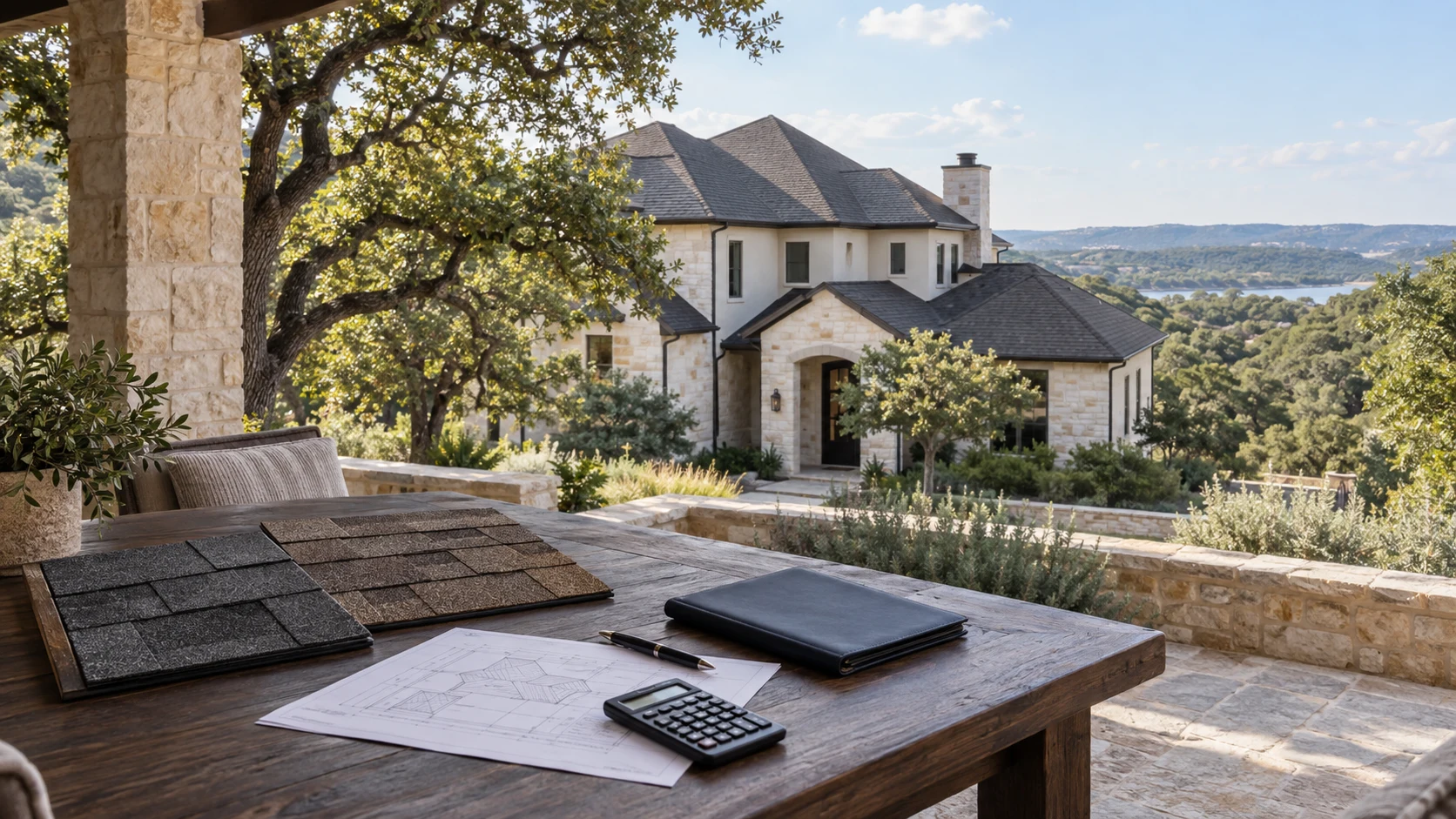
Leaks & storm damage
A ceiling stain, missing shingle or recent storm is a reason to investigate. It does not identify the cause or tell you how much roof work is needed.
Keep away from wet electrical fixtures, sagging ceilings and unstable areas. Leave roof access to a professional. If there is immediate danger, move to safety and seek emergency help.
From a safe location, photograph the affected rooms and visible exterior symptoms. Note when the problem began, the weather and any previous leaks or repairs.
Request photographs of observed conditions, the suspected source and a written repair scope. Ask what could not be inspected and whether further investigation is needed.
Repair or replace
Compare the practical work each option includes. Age, a storm date or a photograph alone cannot settle the decision.
Worth discussing when the issue is localized and the surrounding roof remains serviceable.
Worth discussing when deterioration is widespread, problems recur or a durable repair is no longer practical.
The accessible roof covering, roof-to-wall connections, penetrations, drainage and ventilation; any visible signs of underlying damage; and the limits of the inspection. Concealed conditions may only become visible during work. Ask how those findings will be photographed, priced and authorized.
Materials & the whole roof
Use this comparison to narrow your priorities. Confirm the exact product, color, roof slope and structural suitability before ordering.
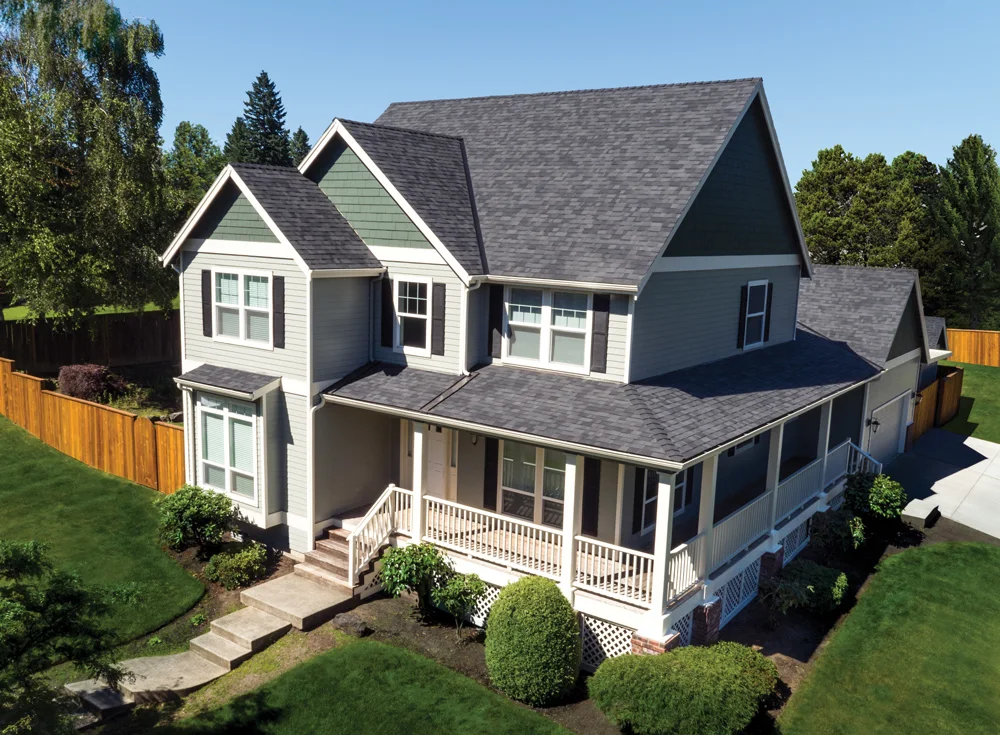
Layered architectural or flatter traditional profiles.
Compare the exact product, color, impact and wind ratings, accessories and written warranty. A laboratory rating does not make a roof hail-proof.
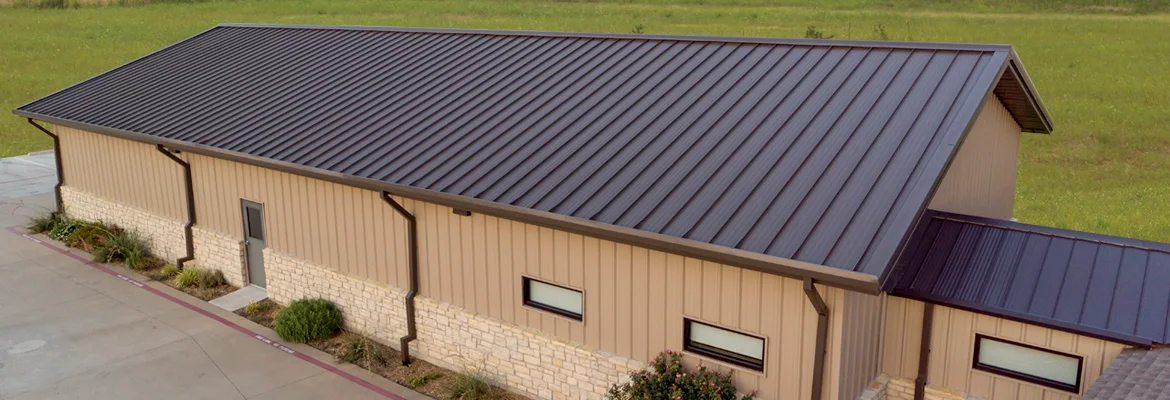
Standing seam, ribbed panels or stone-coated steel.
Compare fastening, finish, roof slope and flashing. These are different systems with different detailing and maintenance needs.

Distinctive profiles and fired-clay texture.
Check structural capacity, underlayment, attachment and matching tile availability. A cracked tile may hide a separate issue underneath.
Product illustrations: Malarkey Roofing Products, Mueller and Ludowici. These are manufacturer examples, not completed company projects.
Natural slate: compare stone thickness, weight, structural suitability and specialist installation scope.
Low-slope areas: discuss a suitable membrane assembly, including insulation, seams, flashing and drainage. TPO, PVC and EPDM have different installation requirements.
Reflective shingles: verify the exact product and color’s published rating and local availability. Appearance alone does not establish reflectivity, and energy results depend on the building and climate.
Roofing & insurance
Your roofer documents construction conditions and estimates the work. Your insurer evaluates coverage and payment under your policy. An inspection does not guarantee claim approval.
Your share of a covered loss. Check whether wind and hail have a separate deductible and ask your insurer to confirm the amount.
Coverage based on replacement costs, subject to policy terms. Payments may arrive in stages; ask what documents and conditions are required for later payments.
Generally replacement cost less depreciation. Ask whether withheld depreciation can be recovered or remains part of your cost.
Texas contractors doing or potentially doing the work cannot act as your public adjuster. Deductibles cannot be waived or absorbed. For a coverage dispute, a licensed public adjuster or attorney may advise you.
Budget & payment
Start with a property-specific written quote. Roof area, access, removal, materials and concealed conditions all affect the price.
They may include different quantities, products, removal work, accessories or repair allowances. Put them side by side and ask each contractor to identify exclusions. A smaller monthly payment can also come from a longer borrowing term, increasing total repayment.
Before you sign
Use this checklist during your conversation. Check off an item once you have a clear written answer.
Checkmarks are temporary and are not saved.
Save the signed scope, approved changes, invoices, completion photographs, product and workmanship documents, and maintenance guidance. Record whom to contact with a concern. These records also help with future repairs or a property sale.
Your inspection conversation
Note the property location, visible symptoms, when they started, and any previous roof work. Use photographs taken safely from the ground.
Identify whether your main concern is a leak, storm damage, an aging roof, appearance, or planning a replacement. Bring questions about materials and timing.
Ask which repairs or materials are proposed, what the work includes, and how installation details, cleanup, and warranty terms will be documented.
Yes. The roof calculator at https://texasprofessionalroofing.com/roof-calculator/ measures a Central Texas roof from aerial imagery, converts it to roofing squares (one square is 100 square feet) with the detected pitch and a 10–16% waste factor, shows a roof replacement cost range for each material tier and gives a repair-or-replace read. It is a free planning aid, not a quote; a measured inspection and written proposal give the actual price.
Ask the insurer for the denial in writing with the policy provisions it relied on, then have the roof documented slope by slope—marked test squares, dated photographs and a written scope—and use that record to request a reinspection. Disputes about the amount, not coverage, may go to the policy’s appraisal clause; the Texas Department of Insurance takes complaints about claim handling. A roofing contractor documents and repairs the roof; under Texas Insurance Code §4102.163 it cannot act as your public adjuster or negotiate the claim. Texas Professional Roofing provides the second inspection and the written record; the insurer decides coverage and payment. See https://texasprofessionalroofing.com/roof-claim-denied/.
Texas Professional Roofing provides roof repair, replacement, inspections, and maintenance for residential and commercial properties. Homeowners can compare shingle products from Malarkey, IKO, GAF, Owens Corning, and Atlas, along with metal roofing systems. The right scope starts with the condition of the roof and the needs of the property.
Our core service area includes Austin, Avery Ranch, Cedar Park, Georgetown, Hutto, Lakeway, Leander, Liberty Hill, Pflugerville, River Place, Round Rock, Steiner Ranch and Westlake. We also maintain local guides for additional Texas project areas. Contact the team with the exact property address to confirm availability, access and scheduling.
The decision depends on the location and extent of damage, the condition of the remaining roof, and the work needed to restore it. A roofing conversation should compare the practical repair scope with replacement options, including materials, ventilation, flashing, and the terms of a written proposal.
Have your property location, a description of the problem, and any photographs taken safely from the ground ready. Note when you first noticed the issue and any previous roof work. The team can use those details to discuss an inspection, materials, timing, and the questions to address in writing.
Call (512) 910-4110 Monday through Friday from 8 AM to 7 PM, or Saturday from 9 AM to 5 PM; the office is closed on Sunday, Central Time. Our address is 6507 Jester Blvd Suite 510-C, Austin, TX 78750.
Talk to the team
Have your property location and roofing concern ready. We’ll discuss the next roofing step and confirm availability for your property.
Call (512) 910-4110Austin office · Monday–Friday 8 AM–7 PM · Saturday 9 AM–5 PM · Sunday closed Central
Reviewed . General guidance; the building, written scope and policy determine the details. The explanations above are complete on this page. These references are optional.
Texas Department of Insurance: insurance and your roof
Texas Department of Insurance: roofing and insurance law
CFPB: personal installment loans