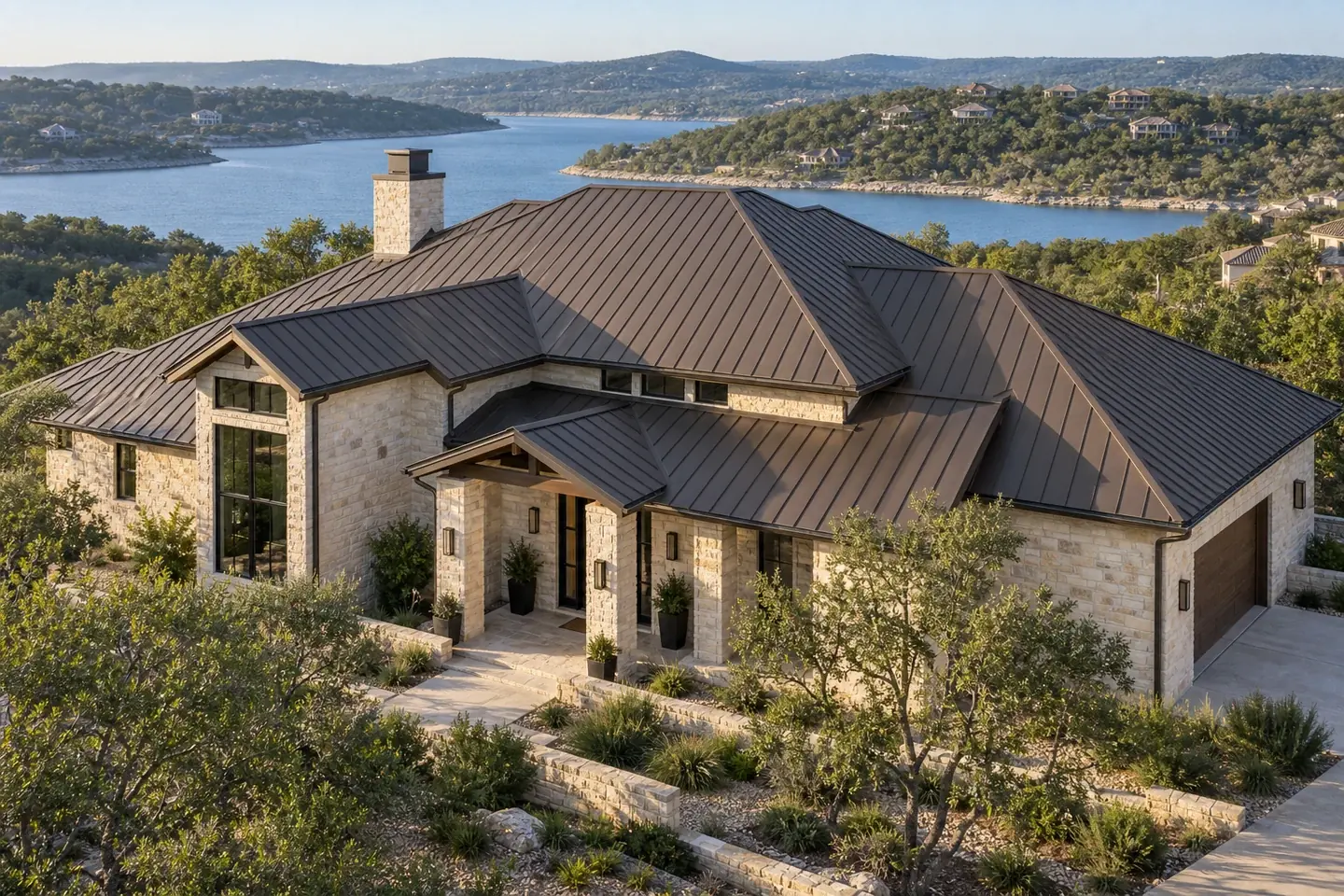
What we see most here, how the repair-or-replace call gets made, what you get for an insurance conversation, and what a free inspection covers before any of it.
What roof repairs are most common in Lakeway?
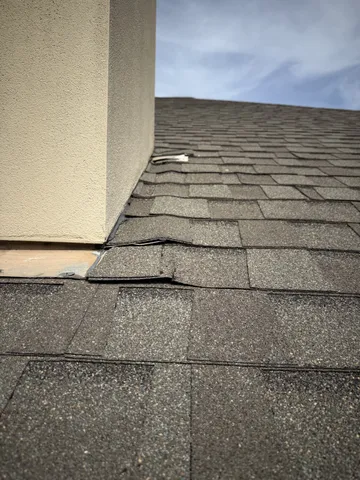
The repair calls themselves follow the concerns on our roof repair page: a leak traced back to a wall or chimney flashing, a pipe boot, a valley or an edge; shingles lifted or torn off by wind, with displaced ridge caps; and hail damage that bruises shingles, cracks tiles and dents vents, gutters and other soft metal, much of it invisible from the ground.
Repair or full replacement: how do you decide?
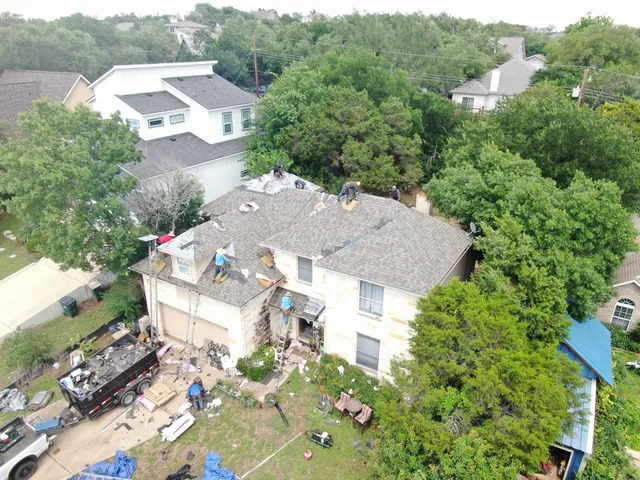
A localized defect on an otherwise serviceable roof usually suits a targeted repair, as long as the fix ties into the existing roof and compatible materials are available. Widespread deterioration, repeated leaks in different places, brittle shingles or damage to the deck change that decision. We do not push a replacement when a repair will do: the inspection establishes the affected area, the remaining condition of the roof around it and what follow-up work to expect, and you get the options in a written scope before deciding.
In Lakeway the trees around a roof feed into that call: where oaks overhang it, debris held in the valleys and moisture that never fully dries wear the covering faster, so have the valleys and drainage looked at before deciding whether a repair will last. If a replacement is on the table, see what goes into a roof replacement, or measure the roof in the roof cost calculator for a planning range by material.
What documentation do you get for an insurance claim?
After a storm, a roof insurance inspection documents the accessible roofing details we observe — shingles, flashing, penetrations — with dated photographs, and we prepare a written roofing scope and estimate you can share with your insurer. With your permission, we can coordinate a site visit with the adjuster to go through the observed damage and the proposed repair methods.
You contact your insurer to open the claim and confirm deadlines. Your insurer decides coverage and payment, your deductible remains yours, and Texas law does not allow a roofing contractor to act as your public adjuster or negotiate your claim; we document and repair the roof. If a claim has already been turned down, start with roof claim denied? What to do next.
Do you repair flat and low-slope commercial roofs?
Yes. Our commercial roof repair work covers low-slope membrane roofs — opened TPO, PVC and EPDM seams, with the repair method matched to the membrane actually on the roof — along with flashing at curbs, edges and penetrations, restricted drains and scuppers, persistent ponding, and metal panel roofs with backed-out fasteners or open laps. Repairs are scheduled with the property manager around access, tenants and weather, and you receive photographs and a record of the work for the building file.
If a repair on a Lakeway business property grows into a reroof, confirm the commercial requirements with the city before it is scheduled, and fold the site logistics described above (access, staging, protecting the grounds) into the written scope. For a condition report first, see commercial roof inspections or the commercial roofing overview.
What’s included in a free roof inspection?
A free, no-obligation roof inspection evaluates the shingles, flashing, vents and roof penetrations, looks for the hail and wind damage common in Central Texas, identifies leak sources and problem areas, and assesses the roof’s age and overall condition. You receive photo documentation and a plain recommendation on whether a repair or a replacement makes more sense, with a written scope before any work begins. Call (512) 910-4110 to arrange a visit to your Lakeway property.