
The process
Review the records
Identify the roof system, warranty documents, previous repairs and access arrangements.
Why it matters
The maintenance plan should fit this building.
Commercial · Austin & Central Texas
Keep drainage, membrane details and rooftop traffic in the maintenance conversation. A documented visit helps property teams prioritize work before the next weather event.
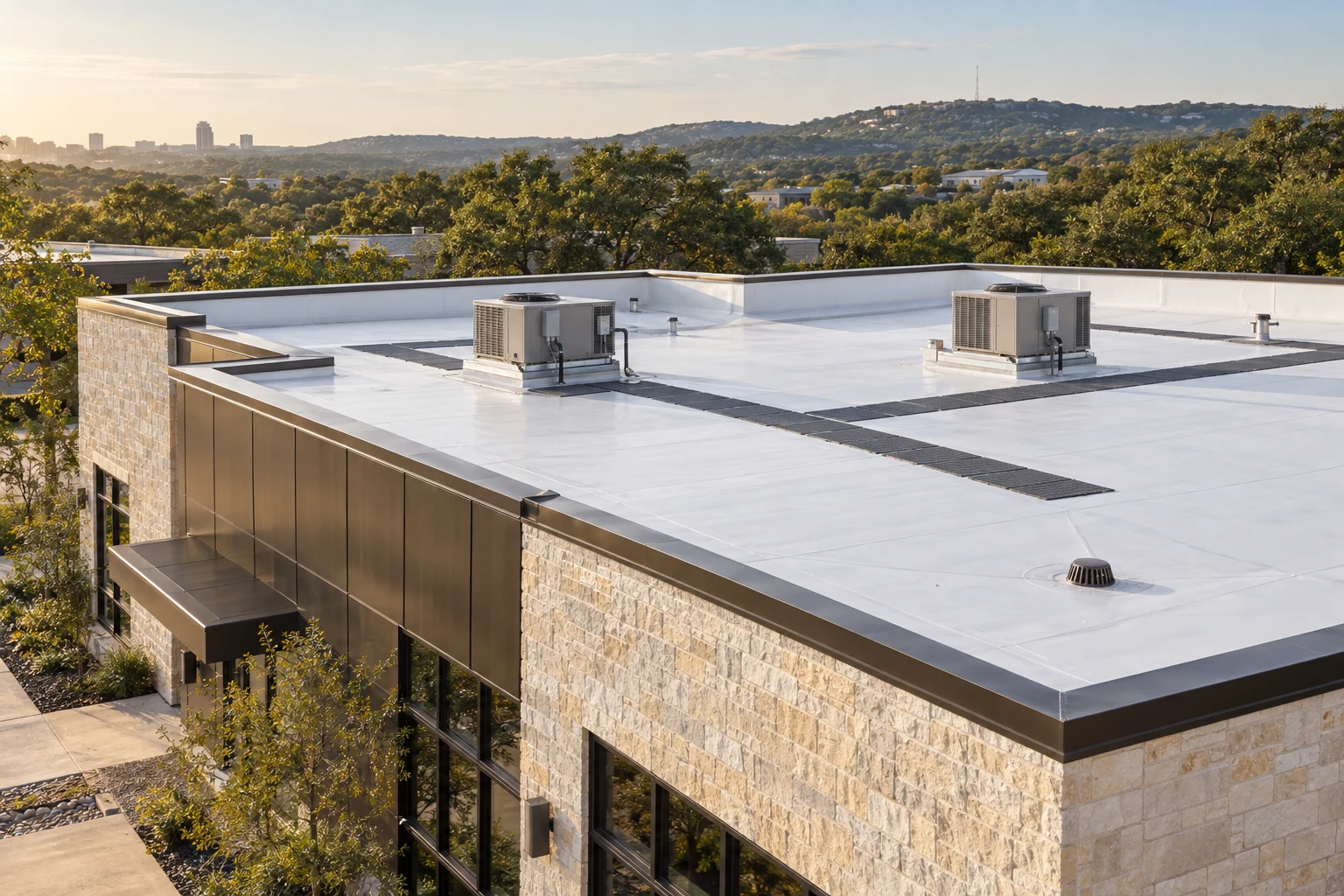
The process
Identify the roof system, warranty documents, previous repairs and access arrangements.
The maintenance plan should fit this building.
The process
Review drains, scuppers and gutters; remove debris within the agreed scope.
Restricted outlets can keep water on the roof.
The process
Review seams, flashings, curbs, penetrations and perimeter conditions.
Transitions and traffic areas deserve particular attention.
The process
Complete compatible maintenance repairs that have been approved.
Maintenance work should follow system requirements.
The process
Check walkways and discuss rooftop equipment service with other trades.
Protecting the membrane is a shared operational task.
The process
Document observations, completed work and priorities for the next visit.
A repeatable record supports maintenance and budgeting.
Explore the stages or pause to read.
Talk with our team · (512) 910-4110
The commercial details
Set the interval using system requirements, roof condition and warranty terms; discuss checks after significant weather or rooftop work.
Keep outlets and overflow paths in the scope. Persistent water needs investigation, not assumptions.
Keep photos, roof plans, invoices and previous repair locations together.
Before work begins
Confirm the roof system, site access, authorized decision-makers and the work included. Agree on protection, staging, tenant communication, cleanup and documentation.
Plan the next stepBefore you decide
Confirm the interval with the roofing team and system documentation. Significant weather and other rooftop work can justify an additional check.
No. Review the actual warranty, its maintenance requirements and the written coverage for the work performed.