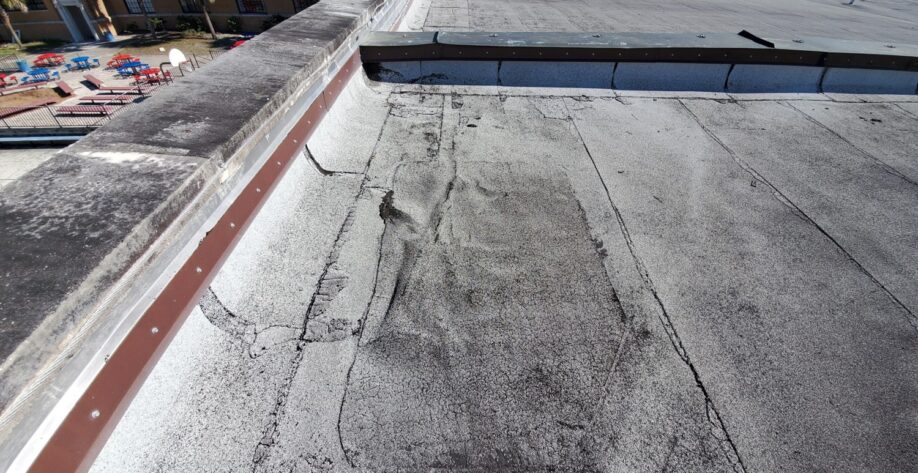
Why Flat Roofs Leak in Austin
Flat roofs are common across both residential and commercial properties, but in Austin, they deal with some tough conditions. Between extreme heat, UV exposure, and sudden storms, these systems naturally wear down over time.
One of the biggest factors is expansion and contraction. As temperatures rise during the day and drop at night, roofing materials shift. Over time, that movement can cause seams to separate, materials to crack, and water to find its way in.
If small issues aren’t addressed early, they can lead to interior damage, mold, and more costly repairs.
How Austin Weather Impacts Flat Roofs
Flat roofs in Central Texas face a combination of stressors:
- Prolonged heat and UV exposure that break down materials
- Temperature swings that weaken seams and flashing
- Heavy rainstorms that expose any vulnerable areas
What starts as a minor issue can quickly turn into a leak during the next storm.
Signs Your Flat Roof May Need Repair
Catching issues early makes a big difference. Common warning signs include:
- Water stains on ceilings or walls
- Bubbling or blistering on the roof surface
- Standing (ponding) water after rain
- Cracked seams or visible splits
- Musty odors or signs of moisture inside
If you’re noticing any of these, it’s worth having your roof evaluated sooner rather than later.
What Proper Flat Roof Repair Looks Like
Addressing the Source
Effective repairs focus on the root cause—not just where the leak shows up inside.
Reinforcing Weak Areas
Seams, penetrations, and transitions are the most common failure points and need proper sealing.
Material Performance
Systems like TPO and modified bitumen are designed to hold up against heat, UV exposure, and long-term wear.
Ongoing Maintenance
Routine inspections and minor repairs can significantly extend the life of a flat roof.
Why Professional Repairs Matter
Flat roofing systems are less forgiving than pitched roofs. Small installation issues or missed maintenance can lead to recurring leaks and larger problems over time.
Working with an experienced local roofing company helps ensure:
- Correct repair methods
- Materials suited for Austin’s climate
- Long-term performance—not temporary fixes
Final Thoughts
Flat roof problems rarely stay small for long—especially in Austin’s climate. Addressing issues early is the best way to avoid bigger disruptions and costly repairs down the line.
Flat Roof Leaks FAQs
How often should a flat roof be inspected?
At least once or twice a year, and after major storms.
Can I repair a flat roof leak myself?
Small patches are possible, but leaks often originate away from where they appear. A professional inspection is usually more effective.
What materials work best for flat roofs in Austin?
TPO and modified bitumen are both durable, heat-resistant options.
How long do flat roofs last?
Most systems last 15–30 years depending on material and maintenance.
What should I do if I notice a leak?
Contain any interior water if needed and schedule an inspection as soon as possible.