
Insurance & Claims
Storm Damage Roof Guide: What to Do Next in Texas
Storm damage in Texas? Learn what to look for, when to file a claim, and how to handle roof repairs after hail or wind.
Talk about your roof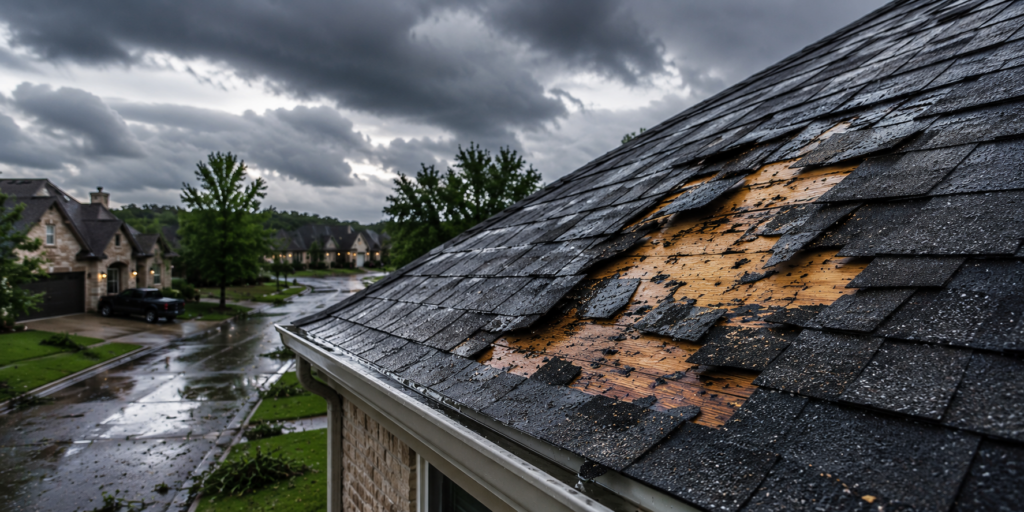
Storms in Texas can do a lot of damage in a short amount of time—especially to asphalt shingle roofs.
The challenge is that not all damage is obvious. What looks fine from the ground can still lead to leaks weeks or months later if it’s not addressed properly.
Knowing what to do after a storm can help you avoid bigger issues down the road.
Step 1: Start with a Roof Inspection
After a storm, the first step isn’t repair—it’s understanding what actually happened.
Common storm damage includes:
-
Lifted or missing shingles
-
Hail impact marks
-
Damaged flashing
-
Granule loss
Some of this is easy to see. A lot of it isn’t.
A proper inspection helps determine whether you’re dealing with minor repairs or something more significant.
Step 2: Understand Your Insurance Options
If the damage is storm-related, insurance may be part of the process.
That usually involves:
-
Documenting the damage
-
Scheduling an adjuster inspection
-
Reviewing your coverage (RCV vs ACV, deductible, etc.)
This is where having someone experienced can help—not to “sell a claim,” but to make sure everything is properly documented and understood.
Step 3: Make the Right Repair Decision
Not every storm-damaged roof needs to be replaced.
Depending on the condition, you may be able to:
-
Repair isolated areas
-
Replace sections of the roof
-
Or move forward with a full replacement if damage is widespread
The key is making the right call based on actual condition—not assumptions.
Step 4: Address Repairs Before Problems Spread
This is where timing matters.
Small issues can turn into:
-
Interior water damage
-
Mold or insulation problems
-
Decking or structural issues
Taking care of repairs early usually keeps things simple—and much less expensive.
What Matters Most (That Most People Miss)
After a storm, a lot of focus goes on shingles.
But the most common leak points are:
-
Flashing
-
Roof penetrations (vents, pipes)
-
Transitions and valleys
These details matter just as much—if not more—than the shingles themselves.
Storm Damage Roofing in Austin
If you’ve recently had a storm come through, it’s worth having your roof looked at—even if everything seems fine.
At Texas Professional Roofing, we help homeowners:
-
Identify actual storm damage
-
Understand their options
-
Make practical decisions based on their situation
No pressure—just clear guidance.
Final Thoughts
Storm damage doesn’t always show up right away.
Taking the time to inspect your roof and address issues early can prevent much bigger problems later.
FAQs
How do I know if my roof has storm damage?
Look for missing shingles, granules in gutters, or interior leaks—but many issues aren’t visible without an inspection.
Should I file an insurance claim right away?
It depends on the extent of damage. An inspection helps determine whether it makes sense.
How soon should I act after a storm?
As soon as possible—early action prevents further damage.
Do all hail storms damage roofs?
Not always. It depends on hail size, wind, and roof condition.
What would you like to do next?
Start with a number, book a look at the roof, or just ask.