
The process
Map the concern
Locate reported leaks and review roof history, equipment access and recent weather.
Why it matters
An interior stain may be remote from the roof entry point.
Commercial · Austin & Central Texas
A commercial roof leak can interrupt occupied space long before its source is obvious. Start with roof-specific investigation, then agree on the repair and access plan.
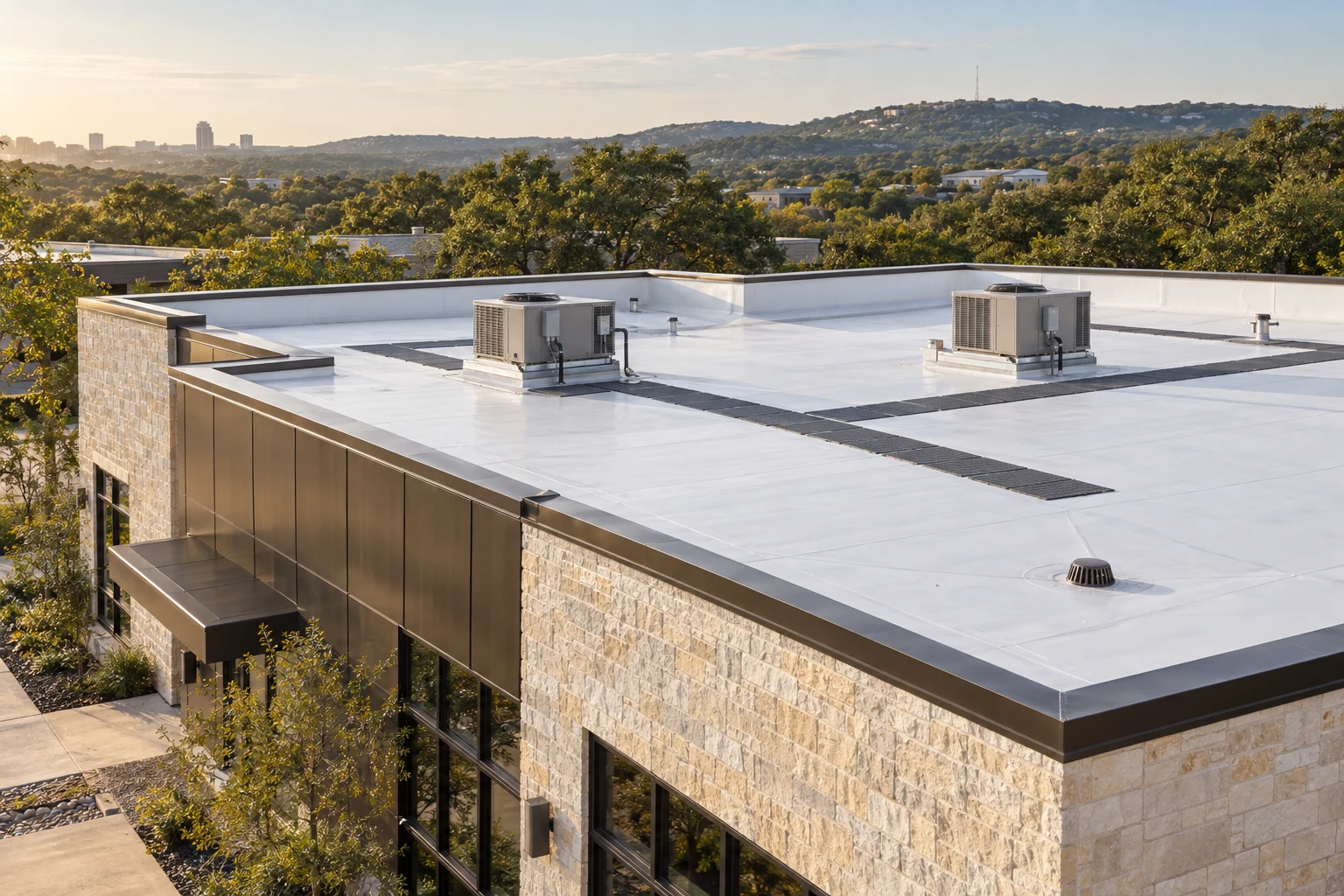
The process
Locate reported leaks and review roof history, equipment access and recent weather.
An interior stain may be remote from the roof entry point.
The process
Inspect membrane seams, curbs, terminations and drainage. Agree on further moisture investigation where needed.
Surface appearance alone cannot show every concealed condition.
The process
Where the agreed scope requires it, remove damaged membrane and wet or unsound underlying material.
A durable repair needs a suitable substrate.
The process
Replace affected layers and use a repair compatible with the existing roofing system.
TPO, PVC, EPDM and bituminous roofs require different preparation and repair methods.
The process
Review seams, edges and water-shedding details using the selected system’s inspection method.
The surrounding details matter as much as the patch.
The process
Record the completed work and discuss monitoring or remaining capital work.
Clear records support the next maintenance decision.
Explore the stages or pause to read.
Talk with our team · (512) 910-4110
The commercial details
Identify the existing membrane before selecting cleaners, primers, adhesives or welding methods.
Discuss the limits of visual inspection and when moisture testing or authorized investigation is appropriate.
Coordinate tenant notices, work zones, access, odor-sensitive areas and temporary protection.
Commercial roof repair in Austin
Austin commercial roofs work hard: long summer heat, sudden heavy rain and hail, and rooftop equipment that other trades service through the year. Leaks often start at a detail rather than in the open field of the roof. Whatever the building, the starting point is the same: find the source, then scope a repair that suits the existing system.
Single-ply seams can open where the membrane has moved, been damaged by foot traffic or been cut around new equipment. TPO and PVC seams are typically heat-welded, while EPDM uses adhesives and tapes, so the repair method follows the membrane actually on the roof. The membrane is identified before any cleaner, primer or patch is chosen.
Perimeter edges, wall terminations, equipment curbs and pipe penetrations interrupt the membrane. Loose or split flashing and failed sealant at these points are common entry paths. A repair rebuilds how the detail overlaps and sheds water, rather than spreading sealant over the surface.
Restricted drains and scuppers keep water on the roof longer, and ponding puts more load on seams and flashing. Repairs can include clearing debris within the agreed scope, repairing the flashing around drains and scuppers, and documenting persistent ponding for a wider drainage decision.
On metal commercial roofs, leaks often trace to backed-out fasteners, worn fastener seals, open panel laps and trim or curb flashing. The repair uses compatible fasteners, sealants and flashing for the panel system, and notes whether wider deterioration makes restoration or replacement the better conversation.
An interior stain can be some distance from where water enters. We map where and when the leak appears, whether wind direction or heavy rain changes it, and what work has recently been done on the roof. That history is then matched against drains, seams, curbs and penetrations above. Where moisture may be trapped in the assembly, we discuss the limits of a visual review and what further investigation the owner authorizes.
Repairs are planned with the property manager: roof access, work zones, tenant notices, odor-sensitive intakes, parking and deliveries, and weather. Where a space below must stay in use, temporary protection and working hours are agreed before crews arrive. After the repair, you receive photographs and a record of the work for the building file and the next maintenance visit.
Not sure what the roof needs yet? Start with a commercial roof inspection, or describe the leak to our team.
Before work begins
Confirm the roof system, site access, authorized decision-makers and the work included. Agree on protection, staging, tenant communication, cleanup and documentation.
Plan the next stepBefore you decide
It depends on the cause and extent. The inspection may identify a localized detail or a larger roofing issue.
Discuss occupancy, access and protection with the team. The project plan determines what disruption can be managed.