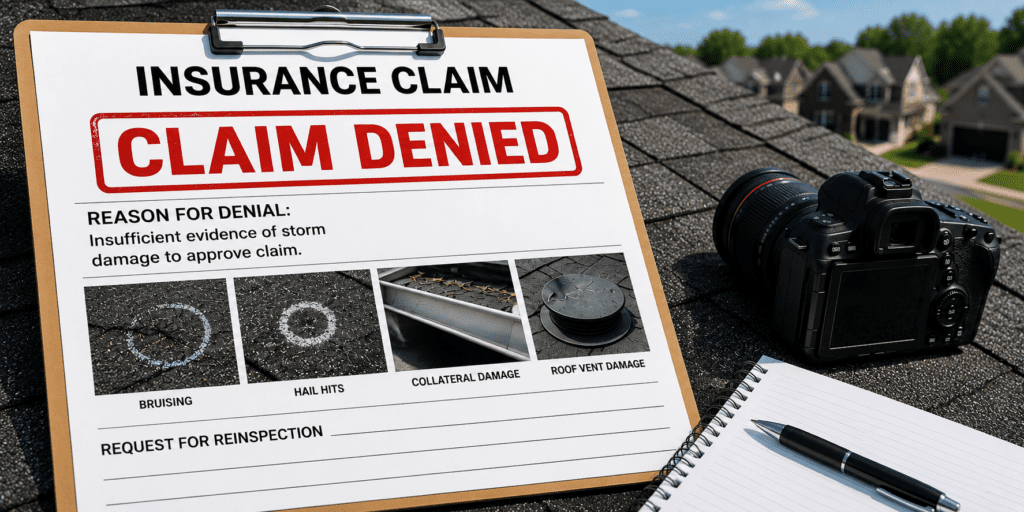
One of the biggest misconceptions homeowners have after a roof claim denial is:
“The insurance company made their final decision.”
In reality, that is often NOT the end of the process.
If you disagree with a denial, request its written reasons and ask the insurer about review options, required documentation and deadlines. A reinspection does not guarantee approval. TDI home insurance guide describes claim and dispute considerations.
Why Some Roof Claims Get Denied
Not every denial means there is zero damage.
A denial may involve the cause of damage, the covered scope, exclusions, policy conditions or insufficient documentation. Ask which reason applies rather than assuming an adjuster overlooked damage.
The Importance of Using a Professional Roofing Contractor
One of the biggest advantages of working with an experienced roofing contractor is:
we understand how insurance inspections are typically performed.
Texas Professional Roofing can inspect physical conditions, provide photographs and explain a roofing estimate. Ask what documentation is included in the inspection scope.
This includes:
- detailed roof photos
- test square documentation
- collateral damage documentation
- slope-by-slope analysis
- damage mapping
- overall roof condition reporting
Understanding Test Squares and Hail Hit Counts
Inspectors may document selected roof areas, but there is no universal hail-hit count in this guide that establishes coverage or replacement eligibility. Ask the insurer which findings and policy provisions support its decision. Do not treat a test-square count as an approval rule.
Why Collateral Damage Matters
Collateral damage to metal components is often extremely important during hail inspections.
This may include:
- vents
- roof flashings
- turbine vents
- gutters
- downspouts
- metal valleys
- chimney caps
- AC condenser fins
- soft metal accessories
Damage to nearby components can support an inspection record, but it does not alone establish a storm date, roof failure or insurance coverage.
What Is a Reinspection?
A policyholder may ask the insurer to review additional evidence or arrange another inspection. A roofer can supply physical observations and a construction estimate; the insurer controls the coverage decision. TDI roofing and insurance guidance explains the boundary between contracting and public adjusting.
Why Reinspections Matter
Sometimes the first inspection simply misses damage.
Other times:
- additional slopes are reviewed
- collateral damage is identified
- better documentation is provided
- roofing experts explain why impacts are storm-related
A second inspection with a different adjuster can produce a completely different outcome.
What Is Hail Damage?
This is one of the biggest areas of confusion for homeowners.
Many people think hail damage means:
obvious holes in the roof.
That is usually NOT how asphalt shingle hail damage appears.
Common Signs of Hail Damage
Legitimate hail damage may include:
- circular impact marks
- granule displacement
- exposed asphalt matting
- bruising
- fractured fiberglass reinforcement
- soft spots in shingles
- random impact patterns
- collateral damage to soft metals
Collateral indicators may include damage to:
- gutters
- vents
- downspouts
- window screens
- garage doors
- fencing
- AC fins
What should the inspection establish? Record the observed condition, location and basis for the diagnosis. A mark or dent does not by itself prove covered roof damage. Compare the insurer’s written findings with the roof documentation and ask for an explanation of unresolved differences.
Can Homeowners Request Another Adjuster?
In many situations:
yes.
Homeowners can typically:
- request a reinspection
- provide additional documentation
- submit contractor findings
- escalate concerns
- ask for another review
Every carrier handles the process differently, but homeowners are not necessarily locked into the initial opinion.
Should You Have a Professional Roof Inspection First?
Absolutely.
Before:
- filing a claim
- accepting a denial
- requesting a reinspection
homeowners should strongly consider having the roof professionally inspected.
A roofing contractor can describe observed damage and repair options. The policyholder decides whether to pursue a claim, and the insurer decides coverage. Refer policy interpretation or settlement disputes to an appropriately qualified independent professional.
Not Every Contractor Is Objective Either
Homeowners should also understand:
not every roofing contractor is unbiased.
Some contractors may:
- aggressively push claims
- overstate damage
- pressure homeowners unnecessarily
A trustworthy contractor should provide:
- honest inspections
- realistic expectations
- photo documentation
- straightforward guidance
—not simply push every roof toward an insurance claim.
The Importance of Documentation
A review packet can include:
- quality photos
- clear test squares
- collateral evidence
- slope documentation
- storm date support
- professional reporting
Organized evidence makes the issues clearer; it does not guarantee another inspection or a different settlement.
Final Thoughts
A roof claim denial does NOT always mean:
“case closed.”
Sometimes legitimate storm damage:
- gets missed
- gets interpreted differently
- falls into gray areas
- deserves another review
That’s why homeowners should understand:
- what hail damage actually looks like
- how reinspections work
- what evidence matters
- and when it makes sense to push back
Because in Texas roofing claims, a second set of eyes can sometimes completely change the outcome.