
Homeowner Tips
ACV on Roof Insurance: RCV and Deductibles
Learn the difference between ACV and RCV roof insurance coverage, recoverable depreciation, and percentage deductibles in Texas roof claims.
Talk about your roof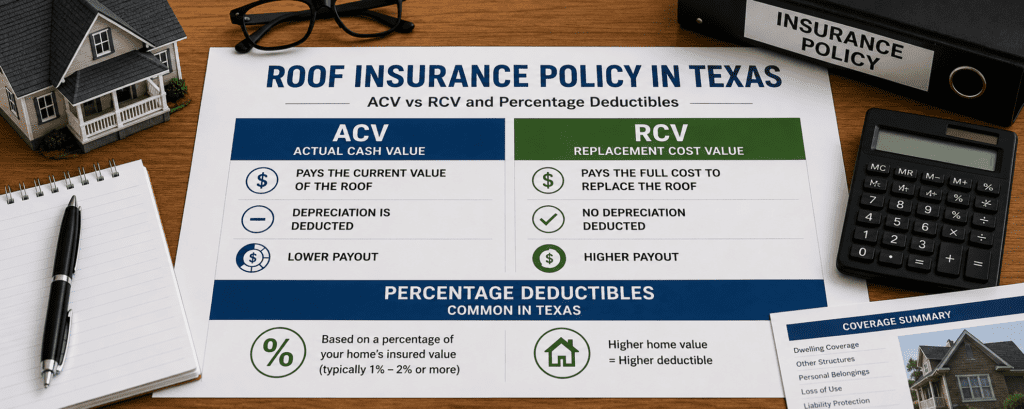
Most homeowners don’t realize how their roof insurance policy works until they actually need to file a claim.
Then suddenly terms like ACV, RCV, recoverable depreciation, and percentage deductibles start showing up — and many homeowners are shocked by what they actually owe out of pocket.
Texas Professional Roofing can inspect roof condition and explain a construction estimate. Policy interpretation and coverage decisions belong with your insurer or a qualified independent adviser. TDI roofing and insurance guidance.
Because in many cases, filing a claim without understanding your coverage can create major frustration later.
What Is RCV Coverage?
RCV = Replacement Cost Value
Replacement-cost and actual-cash-value coverage have different settlement conditions; compare the actual policy and premium rather than assuming a label answers every coverage question.
Replacement-cost coverage may pay eligible repair or replacement costs subject to policy conditions, including:
- your deductible
- any non-covered items
- temporary depreciation holdback
Example
Hypothetical example, assuming the loss and stated scope are covered:
- Roof replacement cost: $25,000
- Deductible: $2,500
- Initial depreciation withheld: $6,000
The insurance company may initially send:
- $16,500 upfront
After eligible work and required documentation, the insurer reviews any recoverable amount:
The remaining holdback is payable only as allowed by the policy, covered costs incurred and applicable limits. Completion alone does not guarantee the full $6,000.
Why RCV Is Important
RCV coverage protects homeowners from absorbing massive depreciation losses on older roofs.
Roof condition can be affected by:
- hail
- extreme heat
- UV exposure
- thermal expansion
- severe storms
What Is ACV Coverage?
ACV = Actual Cash Value
This is where many homeowners get surprised.
With ACV coverage, the insurance company factors depreciation into the payout based on the roof’s age and condition.
That means the older the roof, the less money the homeowner receives.
Example of an ACV Roof Claim
Hypothetical example: assume a covered replacement estimate of $25,000, depreciation of 40% and a $2,500 deductible. The assumed roof age below does not establish a required depreciation rate.
- New roof cost: $25,000
- Roof age: 17 years old
- Depreciation: 40%
- Deductible: $2,500
With those assumptions and no other adjustments, the arithmetic is:
$25,000 − $10,000 depreciation − $2,500 deductible = $12,500.
That leaves the homeowner potentially paying:
$12,500 of the assumed $25,000 project price remains outside that payment.
In many situations, filing the claim may not even make financial sense.
Review the Current Roof Endorsements
Check your current declarations, endorsements and settlement language at renewal. Ask the insurer to explain any roof-age schedule, cosmetic exclusion or deductible change in writing. The TDI home insurance guide explains the coverage concepts; it does not establish your individual policy terms.
What Is Recoverable Depreciation?
On RCV policies, insurance companies often withhold part of the payment initially.
This is called:
Recoverable Depreciation
Ask your insurer which completion documents and deadlines apply:
- the contractor submits photos
- final invoices are sent
- supplements are finalized
The insurer determines any remaining payment under the policy and documented covered costs; a final invoice does not automatically release every estimated amount.
This is why many homeowners initially think they are being underpaid — when in reality part of the payment is being held until completion.
Understanding Roof Deductibles in Texas
A deductible may be a stated dollar amount or a percentage of a specified policy limit.
Percentage Deductibles Explained
For example, a policy might state:
1% or 2% Wind/Hail Deductibles
This percentage is based on:
The applicable dwelling coverage limit stated in the policy
—not the roof price.
Example
Hypothetical example: if the applicable dwelling coverage limit is:
- $500,000
And you have a:
- 2% wind/hail deductible
Your deductible is:
$10,000
Not $2,000.
This catches many homeowners completely off guard.
Why Deductibles Matter Before Filing a Claim
One of the biggest mistakes homeowners make is filing claims before understanding:
- policy type
- deductible
- roof age
- likely claim value
Example:
- older ACV roof
- high percentage deductible
- moderate storm damage
In that situation, insurance may pay very little — even if damage exists.
That’s why professional roof inspections matter before filing.
What Homeowners Should Check Right Now
Pull out your insurance policy and verify:
1. Is Your Roof ACV or RCV?
This is one of the most important questions.
2. What Is Your Wind/Hail Deductible?
Look for:
- 1%
- 2%
- separate roof deductible language
3. Are There Roof Age Limitations?
Ask whether your policy contains an age-based schedule or limit and obtain the exact terms.
4. Are Cosmetic Damages Excluded?
This is especially important for:
- metal roofs
- soft metals
- gutters
- vents
Should You File a Roof Claim?
Not every roof should become an insurance claim.
Before filing:
- have the roof professionally inspected
- document actual storm damage
- understand your deductible
- understand your coverage type
- estimate realistic claim value
Texas Professional Roofing can provide roof observations and construction pricing. You decide whether to file; discuss policy-specific implications and reporting deadlines with your insurer or a qualified independent adviser.
A trustworthy contractor should help you make an informed decision — not simply push every homeowner into filing.
Final Thoughts
The difference between:
- ACV vs RCV
- 1% vs 2% deductibles
can mean tens of thousands of dollars out of pocket.
Understanding your policy before storm season hits can help you:
- avoid surprises
- make smarter claim decisions
- protect your home properly
- avoid filing unnecessary claims
If you are unsure what your policy says, ask your insurer or a qualified independent adviser. A separate roofing inspection can document physical conditions without determining coverage.
What would you like to do next?
Start with a number, book a look at the roof, or just ask.